


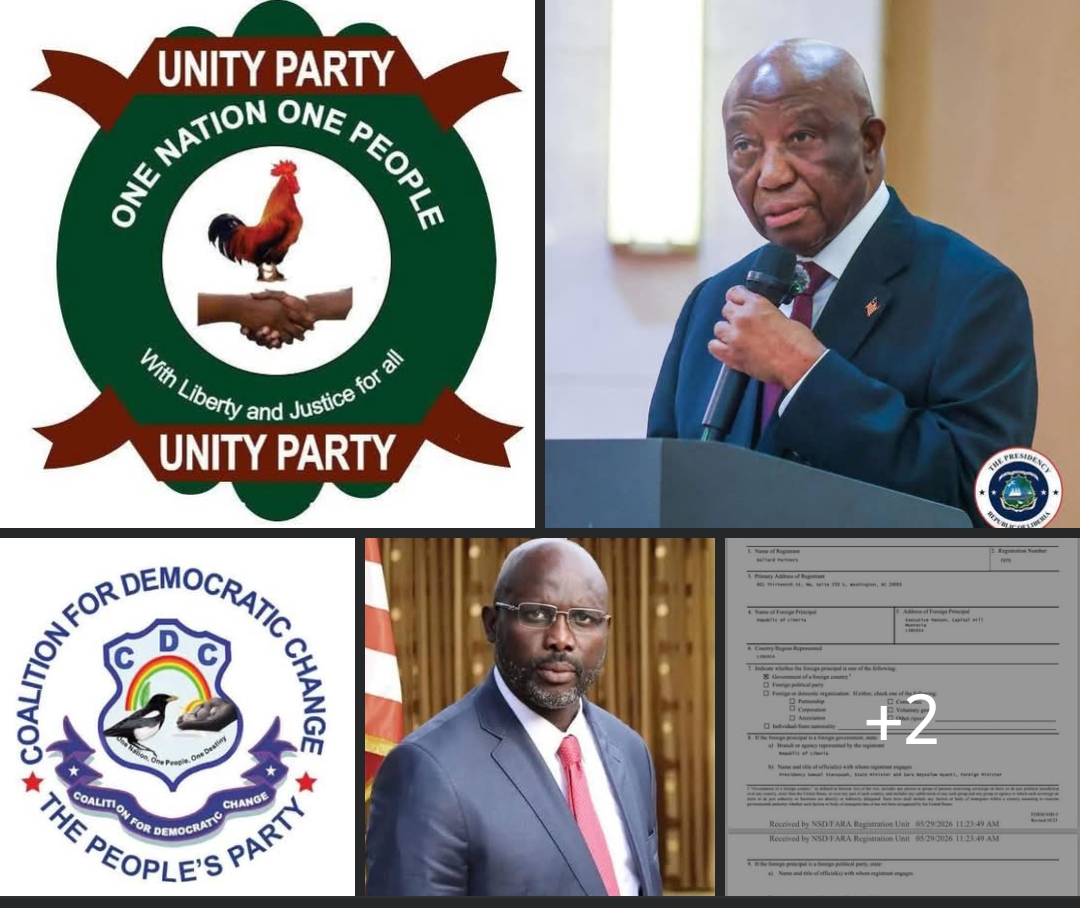
By: Wilmot Konah, Editor of News —DN News Liberia
When the Coalition for Democratic Change (CDC) government hired American lobbying firms during the administration of former President George Weah, opposition politicians, activists, and media commentators loudly condemned the practice. They described it as wasteful spending, image laundering, and an insult to ordinary Liberians struggling through economic hardship.
In 2022, critics attacked the CDC government after it signed a lucrative contract with Washington lobbying powerhouse Ballard Partners at a reported cost of US$75,000 per month. Commentators argued that instead of paying expensive lobbyists in Washington, the government should have focused on corruption, unemployment, poor roads, healthcare, and the rising cost of living at home.Some critics even suggested that no amount of lobbying could repair Liberia’s international reputation if governance problems remained unresolved. Editorials in major Liberian media outlets insisted that “bread and butter issues” mattered more than public relations campaigns in the United States.
Fast forward to 2026.
Today, the Unity Party-led government has signed its own agreement with the same Ballard Partners — this time for an even larger amount: US$100,000 every month.According to documents now circulating publicly, the Liberian Government entered into a one-year agreement with Ballard Partners on May 18, 2026, to provide strategic consulting and advocacy services before the United States government. The contract was signed by Minister of State for Presidential Affairs Samuel A. Stevquoah on behalf of Liberia and by Brian Ballard on behalf of the lobbying firm.
Under the agreement, Liberia will pay US$100,000 monthly in quarterly installments of US$300,000, excluding additional travel and operational expenses. The contract automatically renews unless terminated.
The obvious question now is simple: what has changed? If hiring lobbyists was irresponsible under the CDC government at US$75,000 per month, how is it suddenly acceptable at US$100,000 per month under the Unity Party government?If lobbying Washington was once portrayed as wasting taxpayers’ money while Liberians suffered, why should Liberians now celebrate a larger lobbying contract during another period of economic struggle?
This is not necessarily an argument against diplomacy or international advocacy. Every government seeks influence in Washington. Foreign governments across Africa routinely hire firms to improve bilateral relations, attract investment, strengthen security cooperation, and increase access to policymakers in the United States.
But consistency matters in politics.What was condemned yesterday cannot automatically become wisdom today simply because a different political party occupies the Executive Mansion.
The same opposition figures, commentators, and activists who once criticized the CDC government for paying American lobbyists now face a credibility test of their own. Will they apply the same standards to the Unity Party administration, or will silence replace outrage?
Likewise, CDC supporters who defended lobbying contracts during the Weah era now find themselves watching their former critics embrace a practice they once described as wasteful and unnecessary.
Perhaps the lesson here is larger than party politics.Liberians are growing tired of selective outrage. They want consistency, accountability, and honesty regardless of which political party is in power. If lobbying abroad genuinely benefits Liberia, leaders should explain clearly what measurable national interests are being achieved. If it is simply another expensive public relations exercise funded by taxpayers, then the public deserves transparency and debate.
At minimum, the Ballard Partners agreement has exposed an uncomfortable truth in Liberian politics: sometimes what is called “bad governance” depends entirely on who is sitting in power.