


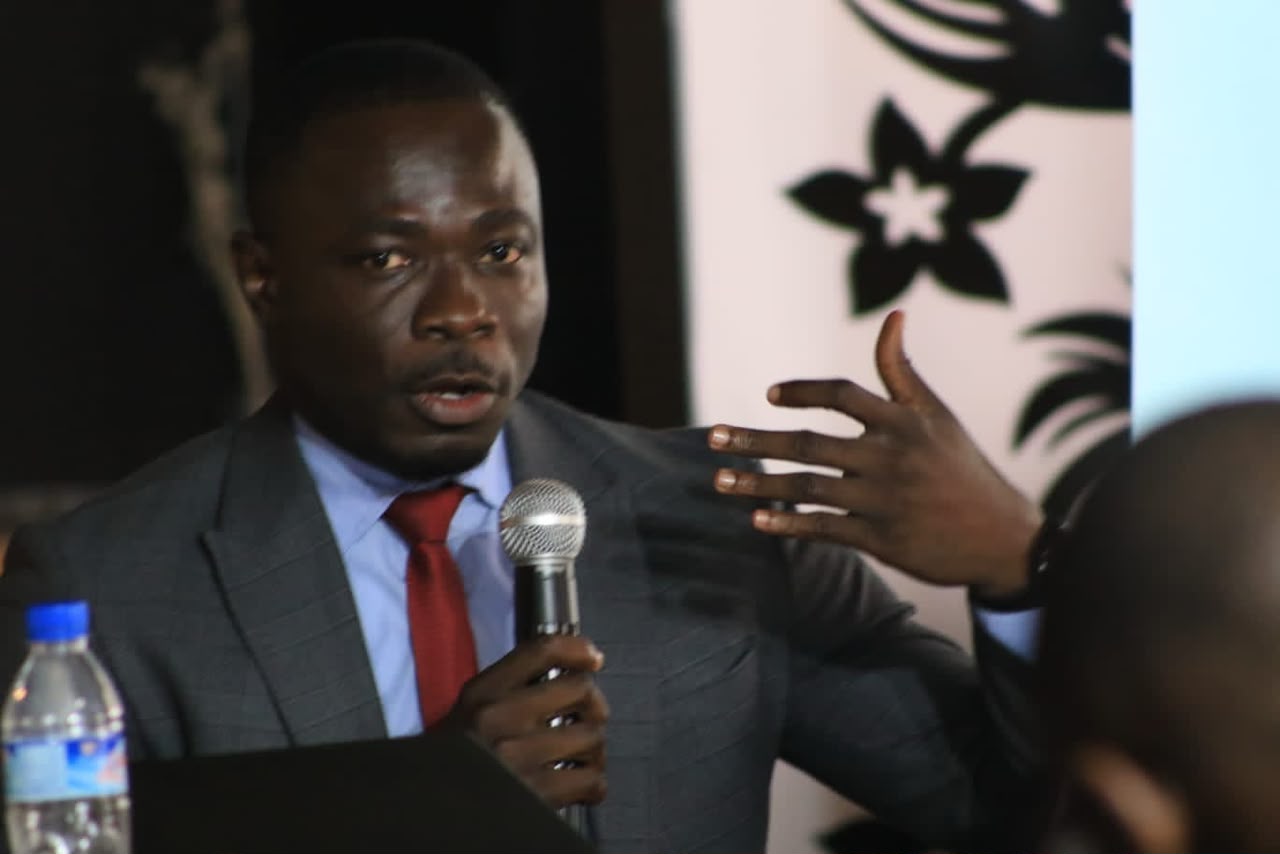
Written by: Emmanuel Mulbah Johnson
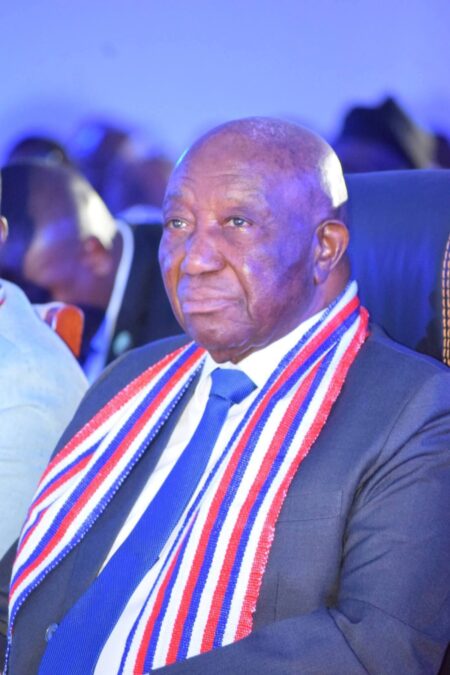
The Unity Party is celebrating a fiscal fantasy: the collection of US$1 billion in domestic revenue. President Joseph N. Boakai has presented the figure as proof that Liberians experiencing pernicious poverty are being rescued. And food is on the table of Ma-Jebbeh, who sells fish in Robertsport, Grand Cape Mount.
The celebration of LRA receipts feels invisible to millions of Liberians; after nearly three years, the indicators are still worse.
Why must the regime stop counting cash and start measuring impact?
The reality is that collecting money and improving lives are not the same thing. Economists have long warned about what is known as the Paradox of Plenty, the phenomenon in which governments generate substantial revenues while ordinary citizens continue to experience poverty, inadequate public services, poor infrastructure, and limited economic opportunities. The lesson from around the world is clear: revenue does not automatically produce development. Wealth can grow while human wellbeing remains impoverished. The difference lies in governance, accountability, and whether public resources are translated into public services, a pathway for which the Unity Party showed no regard. Have we investigated the 10-million-dollar mansion built with public monies for President Boakai in Foya? Have we audited the hand-to-mouth jobs programs provided by the Youth and Sports Minister Cornelia W. Kruah?
Africa offers several cautionary spiteful examples. Equatorial Guinea became one of the richest countries in Africa on paper after oil transformed its economy. Yet despite decades of enormous oil revenues, the country continued to struggle with poverty, weak health outcomes, inadequate education spending, and poor human development indicators. The World Bank recently reported that nearly half of Equatorial Guinea’s population still lives in poverty despite the oil wealth that elevated it into the ranks of upper-middle-income economies. Human Rights Watch has repeatedly described the country as a textbook example of how extraordinary national wealth can coexist with persistent deprivation among ordinary citizens.
Angola presents a similar painful warning. Decades of oil wealth generated impressive economic growth and substantial government revenues, yet poverty, inequality, unemployment, and weak access to services remained stubbornly high. The World Bank and IMF have both noted the disconnect between Angola’s natural-resource wealth and the living conditions experienced by many citizens, particularly young people and poor households. Economists studying Angola have used it as a classic example of the Paradox of Plenty, where large revenues alone failed to deliver broad-based prosperity because institutions, diversification, and human-capital investments lagged behind revenue generation.
Even closer to home, Sierra Leone operates with a national budget that exceeds US$1 billion, yet it remains among the poorest countries in the world on many human-development indicators. The lesson for Liberia is straightforward: budgets do not improve lives. Revenue collection does not reduce poverty. Announcements do not build roads. Liberia Revenue Authority receipts do not automatically put doctors in JFK hospitals, electricity in Zorzor, or food on family tables in Ganta. That is why many Liberians struggle to share the Executive Mansion excitement over the US$1 billion paper victory. We are in September. The fiscal year has only two months to enter December. Yet ordinary citizens are already being asked to celebrate a figure that has not translated into visible improvements in their lives. They are being asked to applaud revenue collection while more than 50 percent of the population lives below the poverty line and over 80 percent survive on between US$1.25 and US$2.15 a day. Liberia continues to rank approximately 177th out of 188 countries on the Human Development Index, placing it among the lowest-performing nations in the world on overall human development. Moreover, the reality confronting ordinary Liberians is not found in LRA revenue reports; it is found in their daily struggles across the country.
It is found in the mother who cannot afford enough food in Clara Town for her children while the country remains heavily dependent on imported rice and spends more than US$200 million annually importing its staple food. It is noticed in families forced to choose between buying medicine and paying school fees. It is found in communities where rising prices continue to erode already unstable household incomes. It is seen in the growing anxiety surrounding the introduction of GST from 12% to 13% and a Value Added Tax (VAT) of 15%, which many fear will increase the burden on consumers and small businesses operating in an economy where informal and vulnerable employment already exceeds 75 to 80 percent. It is reflected in the country’s alarming child mortality rates reported by the World Bank and the WHO. Liberia remains among the worst-performing countries globally for infant mortality, recording approximately 63 to 64 deaths per 1,000 live births. The country ranks among the four worst in the world on this measure. Approximately 86 children out of every 1,000 die before reaching their fifth birthday, placing Liberia among the ten worst countries globally for under-five mortality. These are funerals where thousands of children whose lives end before they have the opportunity to begin.
It is found in the water and sanitation crisis affecting millions of Liberians while Mo Ali parades on Facebook. More than one-third of the population practices open defecation (poop in public). In rural communities, approximately 74 percent of residents lack access to safe sanitation facilities. Nearly 73 percent of Liberians lack basic handwashing facilities with soap and water. As a result, preventable water-borne diseases continue to kill children every year. It is observed in Liberia’s public healthcare system, where there is roughly one doctor for every 15,000 people and where nearly one-third of households face significant physical barriers to reaching a functioning health facility. A billion dollars collected by government means very little to a parent who cannot find medicine for a sick child in Tuzon, Grand Gedeh County. It is seen in an education system where more than 54 percent of households have at least one school-aged child not enrolled in school. Nearly half of Liberia’s schools lack access to clean drinking water, and only 27 percent have basic toilet facilities. No nation can claim meaningful development while so many children remain excluded from quality education.
This reality is seen in the darkness experienced by communities across the country. Between 60 and 79 percent of Liberians lack reliable access to electricity. In 2026, students still study under candlelight and kerosene lanterns. Small businesses spend scarce resources on generators. Clinics are struggling and closing due to lack of medicines and funding. The entire country remains disconnected from the opportunities that modern energy provides. Our roads remain unpaved across major economic corridors, isolating agricultural communities from markets and limiting economic growth. In Lofa, farmers continue to lose income because they cannot reliably transport their produce. In Bong County, rural communities remain disconnected from healthcare, education, and business. The government wants credit for improving revenue collection while we are being eaten by mosquitoes. Moreover, the US$1 billion collection was achieved largely through increasing taxes on poor businesses rather than through a real expansion of the productive economy. Collecting more from a struggling economy is not the same as growing that economy.
This is why the real question facing Liberia is not whether it can collect a billion dollars. The real question is whether it can transform that billion dollars into better lives. Can it reduce child mortality in Grand Bassa? Can it provide safe drinking water in Nimba? Can it build roads that connect farmers to markets in Grand Kru and Bong counties? Can it put doctors in clinics and teachers in classrooms? Can it create jobs for young people? Can it bring electricity to communities living in darkness? Those are the questions ordinary Liberians ask every day. History will not remember how much revenue the government collected in 2026. History will remember whether that money changed the lives of the people in 2026.
Until ordinary Liberians can point to tangible improvements in their daily lives, the impacts of the celebration remain invisible. For millions of citizens facing poverty, hunger, unemployment, inadequate healthcare, poor infrastructure, and limited opportunity, the billion-dollar revenue collected is not yet a development success story. Rather, it is a paper victory that ordinary Liberians cannot feel.