

By Wilmot Konah, dadekolly20@gmail.com
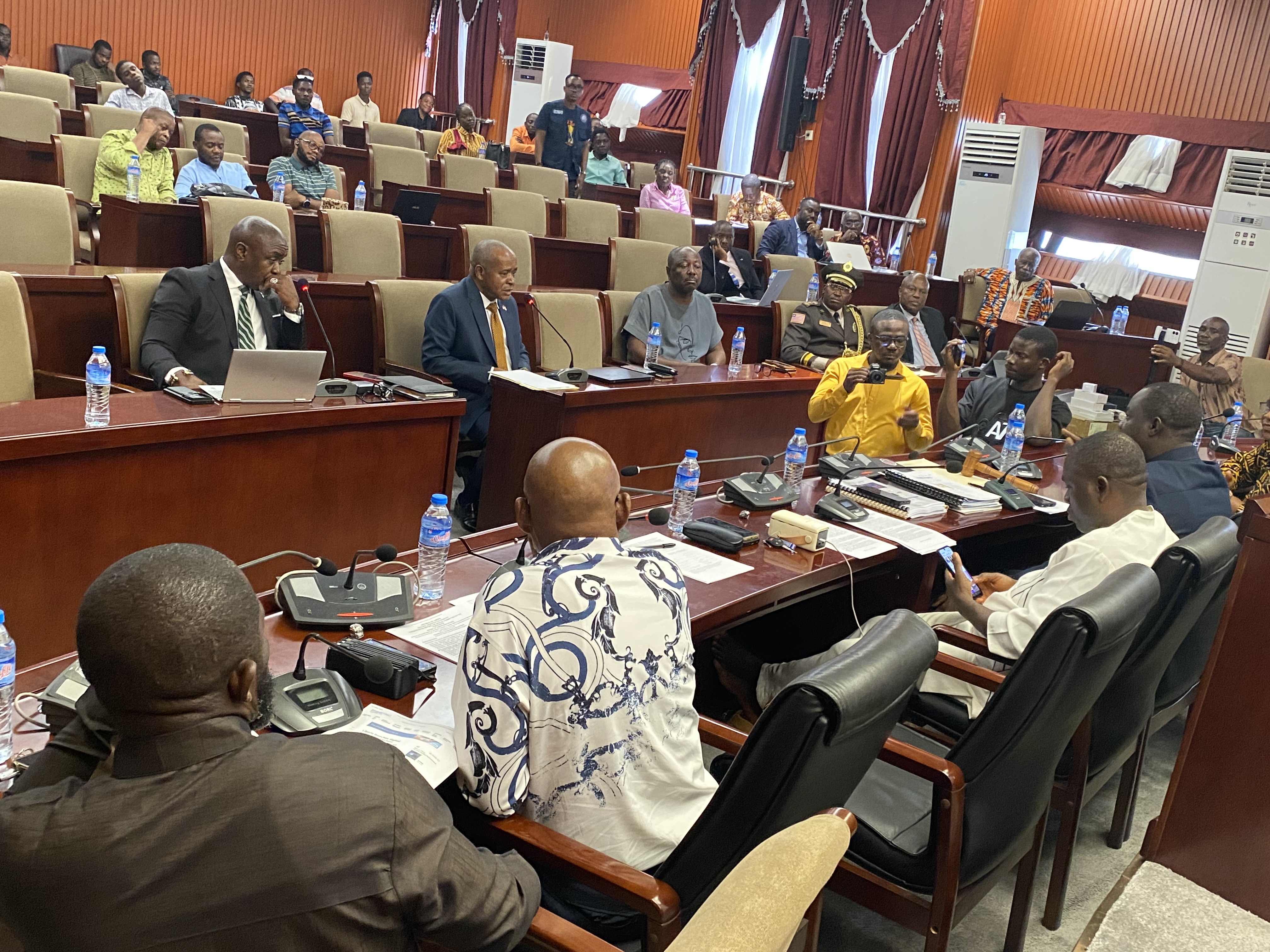
Monrovia — The House of Representatives came alive with debates Wednesday, November 11, 2026, during a third hearing into the proposed US$54 million concession agreement between the National Identification Registry (NIR) and Austrian State Printing House (OSD), as three Liberian technology companies expressed disappointment over their exclusion from the bidding process and challenged the agency’s decision to favor a foreign company.
The companies, comprising MWETANA Consulting and Technology Group, Lake Piso Solutions, and Dynamic Global Technologies, told lawmakers that local firms have the expertise and experience to deliver a modern biometric identification system for less than US$20 million. They also cited previous work with government institutions, including the Liberia Revenue Authority (LRA), NASSCORP, the Civil Service Agency (CSA), and the National Elections Commission (NEC), as evidence of their capacity.
Vivien C. Jones, CEO and Solutions Architect of MWETANA Consulting and Technology Group, said excluding local companies undermines the opportunity to develop Liberia’s technology sector and build local capacity.
“Liberia cannot continue to overlook its own professionals while spending millions of dollars to bring in foreign companies for services that Liberians are equally capable of providing. We are not asking for special treatment; we are asking for a fair opportunity to compete and demonstrate what local expertise can deliver,” Jones said.
Varney A. Fahnbulleh, a member of the consortium also questioned the proposed cost, arguing that local companies could provide the service at a significantly lower price.
“We believe Liberia’s national identity system should be built with strong local participation. Our companies have the experience and proven track records to undertake this responsibility. It makes little sense to pursue a US$54 million concession without giving qualified Liberian companies the opportunity to compete,” Fahnbulleh said.
The companies also raised concerns about the security of Liberia’s biometric data under the proposed arrangement. The concession is intended to modernize the country’s identity infrastructure by linking the National ID System with the Civil Registration and Vital Statistics (CRVS) system.
Meanwhile, NIR Executive Director Andrew Peters defended the proposed agreement, saying OSD has the capacity and practical experience to deliver the project. He appealed to lawmakers to approve the concession.
Following the hearing, members of the House joint committees on Concessions and Ways, Means, Finance and Budget instructed the NIR to submit documentation explaining why local companies were excluded from the bidding process. Lawmakers are expected to conduct further reviews before making a decision on the proposed agreement.
