

By Staff Writer
Liberia’s land governance sector has recorded one of its most significant transformations in recent years, following the closure of the Sustainable Land Services in Liberia (SLSL) Project.
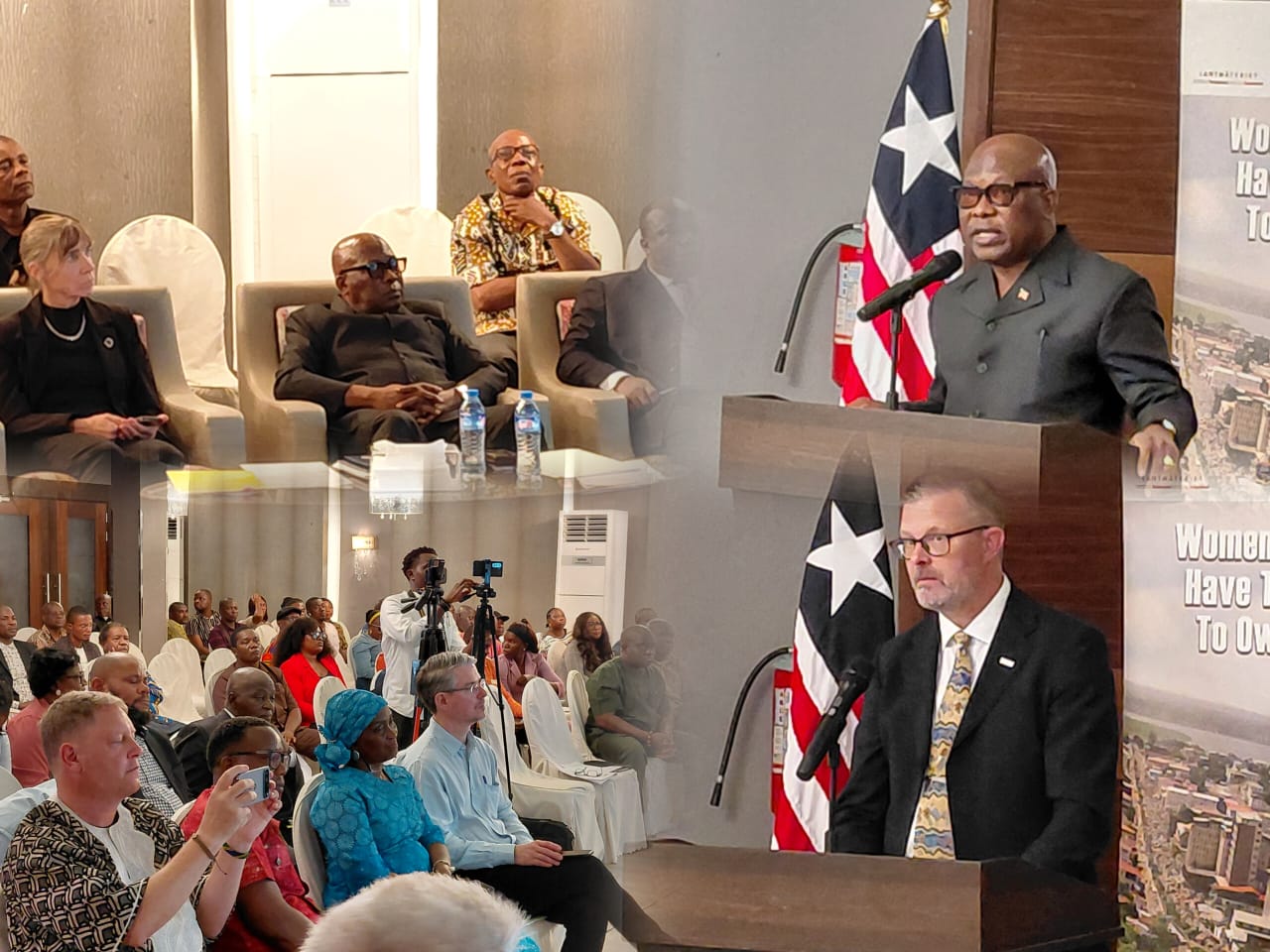
The Liberia Land Authority (LLA) declared that the successful implementation of the SLSL Project has greatly strengthened institutions, modernized land administration, expanded women’s land rights, and improved public access to land services in Liberia. Speaking during the Official Closing Seminar of the SLSL Project, funded by the Swedish Government, LLA Chairman Samuel Kpakio described land reform as a critical pillar of national development, noting that effective land governance is essential to peace, economic growth, investment, and social inclusion.
Kpakio declared, “The gains achieved through this project must be preserved, strengthened, and expanded. Land governance is not merely an administrative function; it is a nation-building agenda that directly impacts the lives and livelihoods of Liberians.” The closing seminar marked the culmination of years of collaboration between the Government, through the LLA and Sweden aimed at strengthening the country’s land administration system and advancing sustainable land management practices.
The colour even yesterday, June 25, 2025, at the Mamba Point Hotel, brought together senior government officials, lawmakers, development partners, civil society actors, and representatives of the Swedish Government among others.
Kpakio praised President Boakai’s commitment to governance reforms and institutional accountability, noting that the administration’s development agenda aligns with efforts to ensure transparent, inclusive, and sustainable management of Liberia’s land resources.
He also commended the Board of Commissioners and staff of the LLA for their dedication in driving reforms that have positioned the institution as a key player in Liberia’s development agenda.
According to the LLA Chairman, one of the most notable achievements of the project was the modernization of the Authority’s customer service delivery system, resulting in faster, more transparent, and responsive land services for citizens.
He said the project significantly strengthened the LLA’s information management infrastructure, improving data collection, records management, accessibility of information, and evidence-based decision-making.
“These improvements have enhanced public confidence in the institution and made land services more accessible to Liberians nationwide,” Kpakio noted.Beyond institutional reforms, he emphasized that the project has empowered communities to manage land resources more sustainably, participate actively in governance processes, and resolve land disputes peacefully.
Chairman Kpakio highlighted gender equality as one of the project’s defining successes, as through support to the LLA Gender Unit and targeted interventions promoting women’s land rights, the project increased awareness about women’s legal rights to own, inherit, access, and benefit from land.
“These interventions are helping to create a more equitable land sector and empowering women as vital contributors to Liberia’s economic and social development,” he said.
The LLA Chairman paid glowing tribute to the Government and people of Sweden for what he described as an unwavering commitment to Liberia’s land reform agenda, asserted that Sweden’s investment has left a lasting legacy of stronger institutions, modern systems, and empowered communities.
“We deeply appreciate the confidence and trust that the Government and taxpayers of Sweden have placed in Liberia’s development aspirations. Their support has produced measurable and sustainable results,” Kpakio added.
Special recognition was also extended to the Swedish Embassy and SLSL Project Manager Christopher Byren, whose leadership and technical expertise were credited with ensuring the project’s success.
Earlier, SLSL Project Manager Christopher Byren presented a comprehensive overview of the project’s achievements, revealing that the initiative significantly strengthened Liberia’s technical and institutional capacity in land administration.
According to Byren, 3,709 individuals, including 2,504 men and 1,205 women, participated in project-sponsored trainings and workshops aimed at enhancing professional and community-level expertise in land management.He disclosed that Swedish experts contributed 1,091 working days in Liberia, helping to build local capacity and support technical reforms.
Among the project’s major accomplishments was the training of 20 Liberians as professional land surveyors through a two-year program conducted at the Forestry Training Institute (FTI) and AME University.
The project also financed the reconstitution of the Surveyors Licensing Registration Board (SLRB) and supported the graduation of 40 licensed surveyors in December 2023, increasing Liberia’s pool of licensed surveyors by an impressive 50 percent.
In the area of customary land rights, the project directly financed the formalization of five communities in River Cess County and developed the Customary Land Information Management Tool (CLIMT), an online platform designed to improve the management of customary land formalization processes.
Byren further disclosed that the project developed a Digital Land Administration System, a major step toward modernizing land governance and reducing inefficiencies in service delivery.
The project also played a key role in advancing decentralization within the Liberia Land Authority, as support included the establishment and strengthening of seven County Land Offices, installation of Starlink internet services, deployment of cloud-based accounting systems, provision of video conferencing equipment, and installation of solar power systems in several counties.
According to Byren, these interventions significantly improved service delivery and contributed to a 41 percent increase in LLA revenue between 2024 and 2025.
Other achievements included the discovery and digitization of the historic Monrovia Atlas (1994–1995), the scanning of 232 archived maps of Liberia from the Royal Geographic Society in London, and the procurement of an Unmanned Aerial System (drone) used for aerial photography and mapping activities.
The project also financed the establishment of a satellite office in Careysburg and the reopening of the County Land Office in Harper, Maryland County.
Grand Gedeh County District 1 Representative and Chairman of the House Committee on Lands, Mines, Energy and Natural Resources, Jeremiah Sokan, praised the project for advancing transparency, decentralization, and community participation in land governance.
“The success of the SLSL Project demonstrates what can be achieved through strong partnerships and sustained investment in institutional development.
The modernization of the Liberia Land Authority and the protection of customary and women’s land rights are critical achievements that will benefit Liberia for generations,” Rep. Sokan said.
Meanwhile, as the curtains fall on the Swedish-funded initiative, other speakers at the event said the project’s impact will continue to be felt across Liberia through strengthened institutions, improved service delivery, enhanced community participation, and expanded protections for women and customary landowners.
They maintained that the end of the SLSL Project is not the conclusion of reform efforts but the beginning of a new chapter in the country’s pursuit of inclusive, transparent, and sustainable land governance.
They added if the sentiments expressed at the closing seminar are any indication, the legacy of the project may well become a defining milestone in Liberia’s land reform journey.-30-
