

By: Melvina Vah — Contributer
Bong County: The Women NGO Secretariat of Liberia (WONGOSOL), in partnership with the Office for the Establishment of the War and Economic Crimes Court for Liberia (OWECC-L), Liberia Massacre Survivors Association (LIMASA), and other PeaceGen Liberia partners, has concluded a series of national memory and reconciliation sessions aimed at supporting victims and survivors of Liberia’s civil wars.
The sessions were implemented under the PeaceGen Liberia “Generation for Peace” project, funded by the European Union and co-funded by the Embassy of Ireland. The three-year initiative is being implemented by Kvinna till Kvinna as the lead organization and WONGOSOL as co-lead, in partnership with the Female Journalists Association of Liberia (FeJAL), Alliance for Peace, Justice and Human Rights (APJHR), National Young Women Political Council of Liberia (NYWPCL), and the Association of Female Lawyers of Liberia (AFELL).
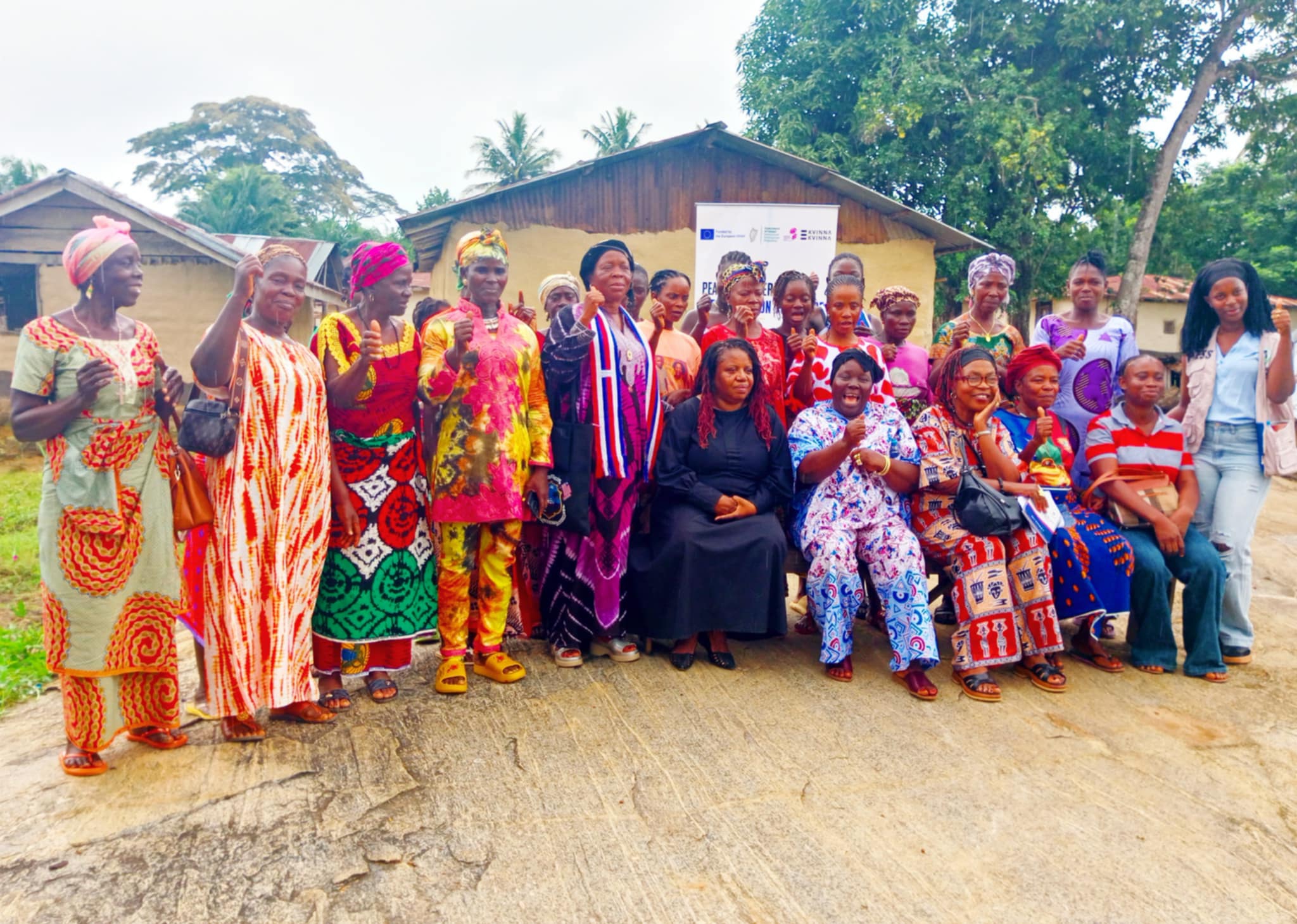
The initiative, which began in Montserrado and Bomi counties, climaxed in Kpokpallah Town, Jorquelleh District #2, Bong County, bringing together war victims and survivors, young people, traditional leaders, women leaders, and community members from Kpokpallah, Samay Town, and nearby communities that were heavily affected during Liberia’s civil conflict in the 1990s.
Giving an overview of the initiative, WONGOSOL Project Officer Berttee Forkpaboi said the sessions were intended to create a safe space for victims and affected communities to openly discuss their experiences while identifying ways to support healing and reconciliation.She emphasized the importance of allowing survivors to tell their stories and ensuring that the experiences of communities affected by the war are not forgotten.
The gathering also highlighted the continued challenges facing families who lost loved ones and property during the conflict.
Bong County Gender Coordinator Madam Viola Cooper, who is also a survivor of the war, welcomed the initiative, describing such engagements as important opportunities for victims to speak about their experiences and begin the process of healing.
One of the most emotional moments of the session came during the testimony, where several war victims and survivors recounted traumatic experiences from the civil crisis.
Survivors spoke about witnessing the killing of family members and loved ones, as well as experiences of sexual violence, torture, forced labor, and other forms of abuse suffered during the conflict.
The testimonies underscored the lasting impact of Liberia’s civil wars on individuals, families, and entire communities, while reinforcing calls for greater attention to victims and survivors.
During a panel discussion, Cllr. Sundaiway E. N. Amegashie of (AFFEL) provided an expert perspective on transitional justice, highlighting its connection to peacebuilding, accountability, reconciliation, and the preservation of historical memory.
The discussion encouraged participants to consider how Liberia can address the painful legacy of its civil wars while creating conditions for lasting peace and preventing future generations from repeating the mistakes of the past.
Mary Lateh, Female Coordinator for the Chiefs and Elders council of Bong County and a survivor of the war, used the occasion to appeal to the Government of Liberia, headed by President Joseph Nyuma Boakai, to pay greater attention to communities that continue to bear the scars of the civil conflict.
Lateh called on the government to visit affected communities, construct and rehabilitate schools, rebuild homes that were destroyed during the war, and provide access to safe drinking water.
She said tangible development initiatives in communities affected by the war would help survivors feel remembered, valued, and supported while restoring hope among residents.
Town chiefs, youth representatives, women leaders, and other community stakeholders expressed appreciation to WONGOSOL and its partners for bringing the memory and reconciliation initiative to their communities.
They stressed the importance of continued engagement with war-affected communities, noting that reconciliation must go beyond dialogue and include practical efforts to improve the lives of victims and survivors.
The conclusion of the sessions marks another step in ongoing efforts to preserve the memories of Liberia’s conflict, amplify the voices of survivors, promote healing, and strengthen community-based peacebuilding.
For many participants, the gathering was not only an opportunity to remember the past but also a call to build a Liberia where the suffering of communities affected by war is acknowledged and where future generations can live in peace, dignity, and unity.
