

By: P. Uriah Suah
GANTA, NIMBA COUNTY – The Deputy Project Coordinator of the Recovery of Economic Activity for Liberian Informal Sector Employment (REALISE) Project, Mrs. Anita S. Marshall, has disclosed significant gains made under the project as it enters the third and final round of its Community Livelihood and Agriculture Support (CLAS) component.
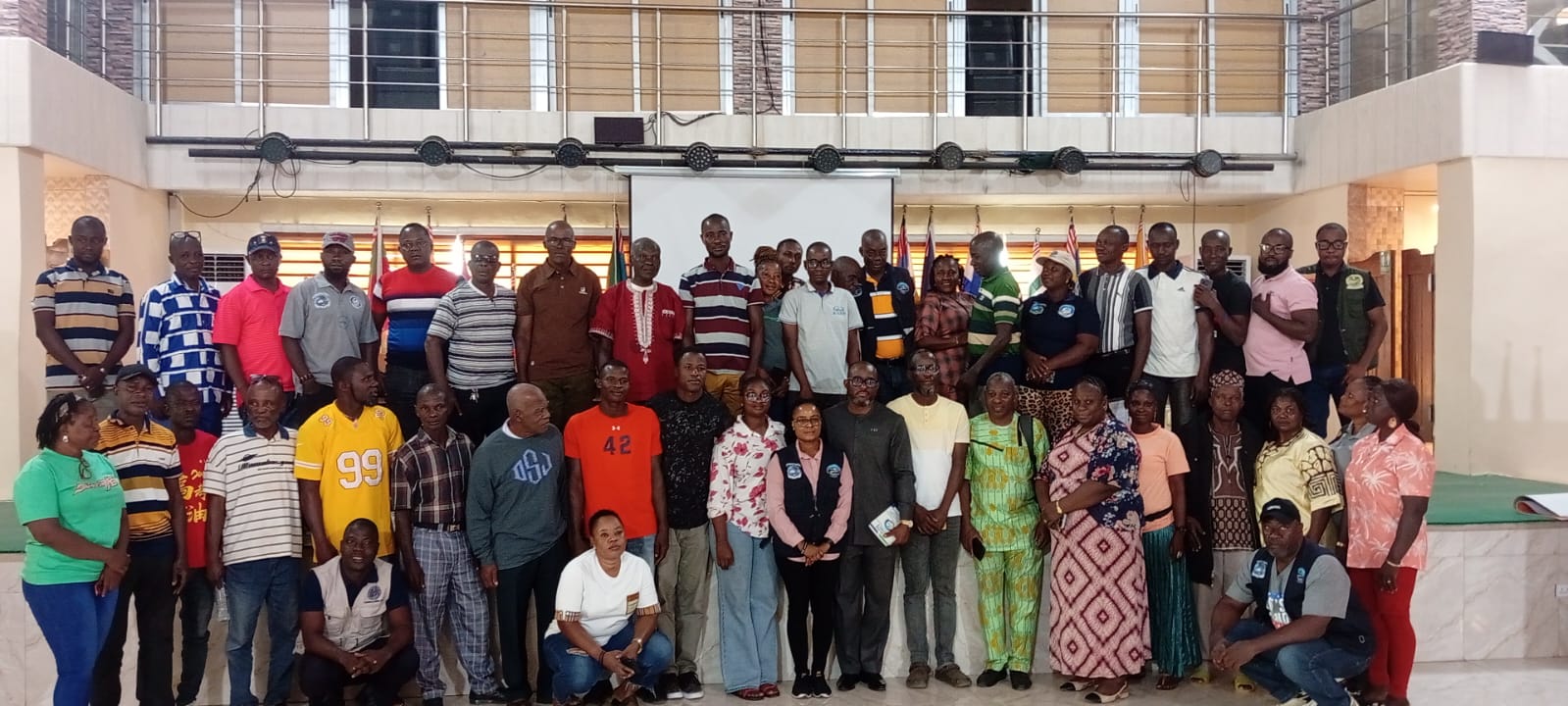
Speaking to reporters during a five-day comprehensive orientation training for service providers in Ganta, Mrs. Marshall said the workshop aims to strengthen coordination and improve delivery as the project approaches its final implementation phase. The training brought together local organizations and representatives from the Ministry of Internal Affairs across four counties Maryland, Bomi, Grand Gedeh and Lofa—to review achievements and challenges from previous rounds and strategize for a successful final rollout.
According to Mrs. Marshall, the CLAS component has been implemented in three phases. Round One covered 192 communities, Round Two expanded to 240 communities, and Round Three now targets 303 communities bringing the total to 735 communities with 24,255 direct beneficiaries.“We want our stakeholders and implementing partners to understand the gains from rounds one and two and see how we can strengthen round three since this is the final phase,” she said.
She explained that beneficiaries in rural communities are cultivating a minimum of 35 acres per community, growing crops including rice and cassava, thereby contributing to food security and household sustainability.Beyond agriculture, beneficiaries under Rounds One and Two received cash grants of US$350 each to support domestic, health, and livelihood needs. In total, more than 14,000 beneficiaries benefited from this income support intervention during the first two rounds. Mrs. Marshall described REALISE as a Government of Liberia initiative funded by the World Bank, the French Development Agency, and the Embassy of Sweden in Liberia.
The project operates in all 14 counties with different interventions in Labor-Intensive Public Works and Small Business Support in Montserrado and Margibi Counties. Community Livelihood and Agriculture Support (CLAS) in eight counties.Social Cash Transfer Programs in Grand Bassa, River Cess, River Gee and Grand Kru.Initially targeting 53,650 beneficiaries, the project has now expanded to approximately 65,000 beneficiaries nationwide.“The objective of the REALISE Project is to increase income-earning opportunities for vulnerable populations, expand income support to food-insecure households, and strengthen Liberia’s national social protection system,” she noted.
In addition to agricultural production and cash grants, Mrs. Marshall revealed that the CLAS component has implemented 432 community sub-projects across participating communities. These projects include renovations of town halls, public school buildings, and low-cost bridges—contributing to basic infrastructure development, sanitation, and improved community resilience.
She emphasized that REALISE does not only focus on economic inclusion but also on broader community development and social protection support. A key innovation under the project is climate-smart agriculture training. Beneficiaries are being equipped with modern farming techniques, access to weather forecast information, and soil management skills to increase productivity and build resilience against shocks.
To ensure sustainability beyond project funding, Mrs. Marshall explained that farming proceeds remain within the communities. Profits are divided into three parts: Village Savings and Loan Associations (VSLA), Farm sustainability funds and Group member sharing. This structure, she said, is designed to keep communities productive for at least three years beyond direct financial support from the project.“We are leaving them with skills, income, knowledge, and structures that will enable them to continue their livelihood activities even after the project ends,” she stressed.
She further noted that some beneficiary groups have expanded into poultry farming and small businesses, diversifying their income sources and strengthening long-term stability. Mrs. Marshall concluded by expressing gratitude to the Government of Liberia and its international partners for their continued support to the REALISE Project, describing the initiative as a critical driver of economic inclusion, food security, and social protection for vulnerable Liberians.-30-
