
By Wilmot Konah |+231775793638 | dadekolly20@gmail.com
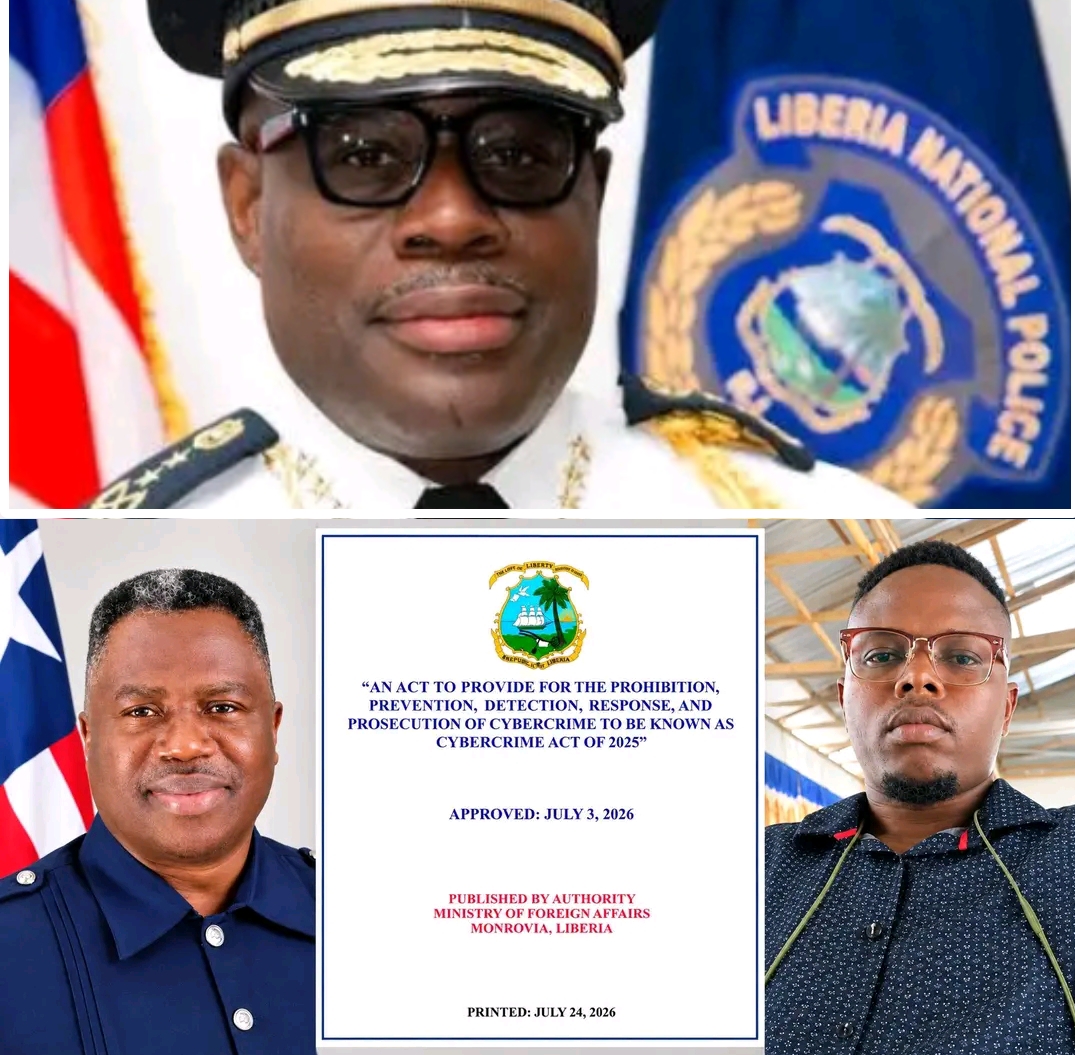
MONROVIA, Liberia — The Inspector General of the Liberia National Police (LNP), Gregory O. W. Coleman, has rejected Vice President Jeremiah Kpan Koung’s request for the release of cybercrime suspect Jerry Nyantee Wrato, who was arrested following allegations involving the creation and circulation of an AI-generated image targeting the Vice President.
In a letter dated September 21, 2026, addressed to Vice President Koung, IG Coleman acknowledged a telephone call from the Vice President concerning Wrato’s arrest, as well as Koung’s subsequent public expression of compassion and request for the suspect’s release.
Coleman commended the Vice President’s willingness to exercise tolerance and restraint toward an individual accused of personally targeting him.
“Your willingness to exercise tolerance and restraint toward an individual accused of personally targeting you is commendable and reflects the maturity expected of public leadership,” Coleman wrote.
However, the Police Inspector General said the matter could no longer be determined solely by the wishes of the person affected once the alleged conduct had come to the attention of law enforcement.
“Once conduct potentially constituting a criminal offense comes to the attention of law enforcement, the matter is no longer determined solely by the personal wishes of the individual affected,” Coleman stated.
According to the LNP, its investigation into the allegations has now been concluded, and investigators have resolved to charge Wrato with four alleged cybercrime offenses.
The charges are Misuse of Devices, Cyberstalking, Distribution of Data Messages That Incite Damage to Property or Violence, and Distribution of Harmful Data Messages. The police said the alleged offenses are in violation of Sections 10.1, 15.1, 18.1 and 19.1 of Liberia’s Cybercrime Act of 2025.
Coleman said the LNP has a statutory responsibility to investigate allegations objectively and take appropriate action based on the evidence and applicable law.
“The Liberia National Police has a statutory responsibility to investigate the allegations objectively and to take appropriate action based on the evidence and applicable law,” he said.
The Inspector General further informed Vice President Koung that Wrato will be forwarded to a court of competent jurisdiction on Tuesday morning, September 22, 2026, for further proceedings. Despite the decision to charge Wrato, Coleman stressed that the police action does not amount to a determination of guilt.
“This action does not constitute a determination of guilt,” Coleman wrote, emphasizing that Wrato remains entitled to the “presumption of innocence and all constitutional and statutory protections until the allegations are adjudicated by the court.”
Coleman said the evidence gathered and the nature of the alleged conduct require that the matter now be submitted to the judiciary.
“The nature of the alleged conduct and the evidence gathered require that the matter be submitted to the judiciary,” he stated. “This will ensure that the law is applied impartially and that the ultimate determination is made through the appropriate legal process.”
The development means Wrato is expected to face court proceedings despite Vice President Koung’s request for his release, with the final determination of the allegations now left to the judiciary.
Liberia’s Cybercrime Act of 2025 was passed by the Legislature in 2025 and later approved by President Joseph Nyuma Boakai on August 19, 2026. The law criminalizes offenses including cyberstalking, misuse of digital devices, harmful data messages, and messages that incite violence or property damage. The case against Jerry Nyantee Wrato, announced on September 21, 2026, is the first notable publicly reported case in which the LNP has announced charges under the new law, about one month after its enactment.
