

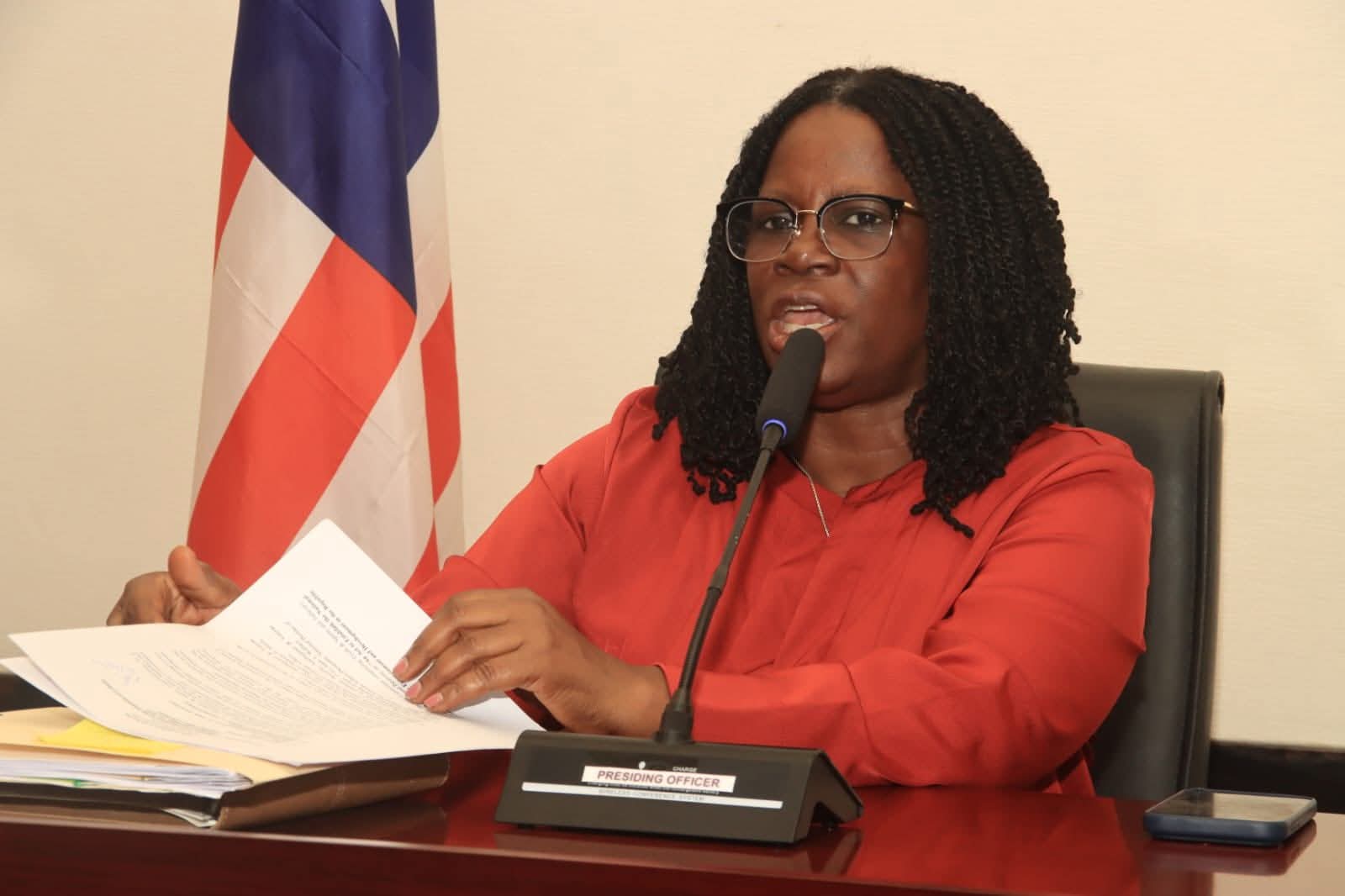
The Liberian Senate is preparing to examine a proposed piece of legislation that seeks to establish a national gold reserve as a means of strengthening the country’s currency and improving long-term economic stability. The bill, titled “The Gold Reserve and Currency Stabilization Act of 2026,”has been introduced by Rivercess County Senator Bill T. Twehway, who formally submitted the measure to the Senate leadership at the Capitol Building on Capitol Hill in Monrovia on February 19, 2026.
In a communication addressed to the President Pro-Tempore and members of the Liberian Senate, Senator Twehway outlined the intent of the proposed legislation, emphasizing that it is designed to ensure that Liberia derives greater long-term benefits from its gold resources while also strengthening the country’s financial position. The Rivercess lawmaker noted that the bill, once enacted into law, would enable the Republic of Liberia to strengthen its monetary value and establish collateral reserves that could be used to borrow for national development.
“I present my compliments and herein submit a Bill for enactment into law, creating and establishing ‘The Gold Reserve and Currency Stabilization Act of 2026,’” Senator Twehway wrote in his message to the Senate leadership. According to him, the legislation would introduce a system that provides metallic backing for the national currency, thereby contributing to long-term fiscal stability and creating a national reserve that can serve future generations. He further stated that the measure would ensure additional value is retained from gold exported from Liberia.
The bill comes amid ongoing discussions among policymakers and economic stakeholders about measures that could help stabilize the Liberian dollar and strengthen confidence in the national economy. Supporters of the proposal believe that linking part of the monetary system to a gold reserve could help reduce inflationary pressures and protect the country against economic shocks.
The preamble of the proposed legislation outlines the reasoning behind the move to establish a gold reserve system. It recognizes that Liberia is endowed with significant gold deposits that represent an important component of the country’s national wealth and heritage. However, the document also expresses concern that current extractive practices allow large quantities of these non-renewable resources to leave the country without sufficient value being retained within the domestic economy. According to the bill, this situation leaves the nation vulnerable to economic fluctuations and limits the long-term benefits that could otherwise be derived from its mineral resources.
Another concern highlighted in the bill is the volatility of the Liberian dollar and the absence of a metallic backing for the national currency, which lawmakers say has contributed to inflation and reduced purchasing power for citizens. The proposal therefore argues that it is the responsibility of the government to ensure that the extraction of mineral wealth leads to sustained fiscal stability and the creation of a national reserve for future generations.
A major component of the proposed act is the establishment of a National Gold Purchase Program to be managed by the Central Bank of Liberia. Under this arrangement, the Central Bank would have the right of first refusal to purchase a portion of all gold mined within Liberia at prevailing international market prices. The proposal also mandates that the Ministry of Mines and Energy require large-scale mining concessions, particularly those holding Class “A” and Class “B” licenses, to allocate a compulsory minimum of one percent of their total gold production for sale to the Government of Liberia in order to build the national reserve.
In addition to the purchase program, the bill introduces a mandatory in-kind royalty system aimed at strengthening value retention within the country. The legislation proposes that all medium and large-scale mining operations pay a one percent royalty in physical gold, separate from and in addition to existing cash-based royalty payments currently required by the government. Under the proposed arrangement, the gold assets would be transferred directly from refineries to the vaults of the Central Bank of Liberia, where they would be preserved as part of the national reserve.
The bill further provides that these reserves would be ring-fenced and protected from routine government spending. According to the proposal, the gold assets could only be liquidated in cases of national economic emergency declared by a two-thirds majority of the Legislature, a measure intended to ensure that the reserve remains a long-term financial safeguard for the country.
Another important aspect of the legislation is the linkage between the proposed gold reserve and currency stability. The bill empowers the Central Bank of Liberia to use the accumulated gold reserve to support the monetary base, thereby providing a metallic anchor for the Liberian dollar. Lawmakers backing the proposal believe that this measure could help curb inflation and strengthen confidence in the national currency.
The bill also allows the government to use the gold reserve as collateral to secure international financing at lower interest rates for major infrastructure projects. Proponents argue that such an approach could help Liberia avoid high-interest commercial loans while unlocking funding for national development initiatives. In addition, the Central Bank would be able to utilize gold-backed credits to intervene in the foreign exchange market when necessary in order to maintain the value of the local currency.
Beyond monetary stability, the proposed legislation places significant emphasis on domestic value addition within the mining sector. The bill calls on the government to provide incentives that would support the establishment of a national gold refinery within Liberia. Lawmakers say this step would help ensure that more of the value generated from gold mining remains within the country and contributes to economic growth and job creation.
The legislation also proposes that within thirty-six months of its passage, a refining surcharge would be applied to raw gold exported from Liberia if it has not been processed domestically to at least ninety-five percent purity. According to supporters of the bill, this provision is intended to encourage investment in local refining facilities and discourage the export of unprocessed minerals.
The proposed act also includes strict enforcement provisions aimed at addressing illegal mining and gold smuggling, which remain persistent concerns in Liberia’s mining sector. The bill states that any corporation or individual found smuggling gold or falsifying production records to evade the requirements of the National Gold Purchase Program or the in-kind royalty system would face severe penalties. These sanctions include the immediate revocation of mining and export licenses, fines equivalent to two hundred percent of the market value of the gold involved, and mandatory prison sentences for principal officers and directors of offending entities.
To ensure accountability and transparency, the legislation calls for the establishment of a Gold Reserve Oversight Committee. The committee would include representatives from the Ministry of Finance and Development Planning, the Central Bank of Liberia, the Ministry of Mines and Energy, and the Liberia Chamber of Commerce. The body would be responsible for publishing quarterly reports detailing the volume of gold held in the reserve and evaluating its impact on currency stability and economic performance.
With the bill now before the Senate, lawmakers are expected to conduct further deliberations and reviews in the coming weeks. The proposal will likely undergo legislative scrutiny, including committee discussions and possible consultations with stakeholders from the mining and financial sectors. If approved by the Legislature and signed into law, the Gold Reserve and Currency Stabilization Act of 2026 could mark a significant policy shift in how Liberia manages its mineral wealth and approaches monetary stability.
