

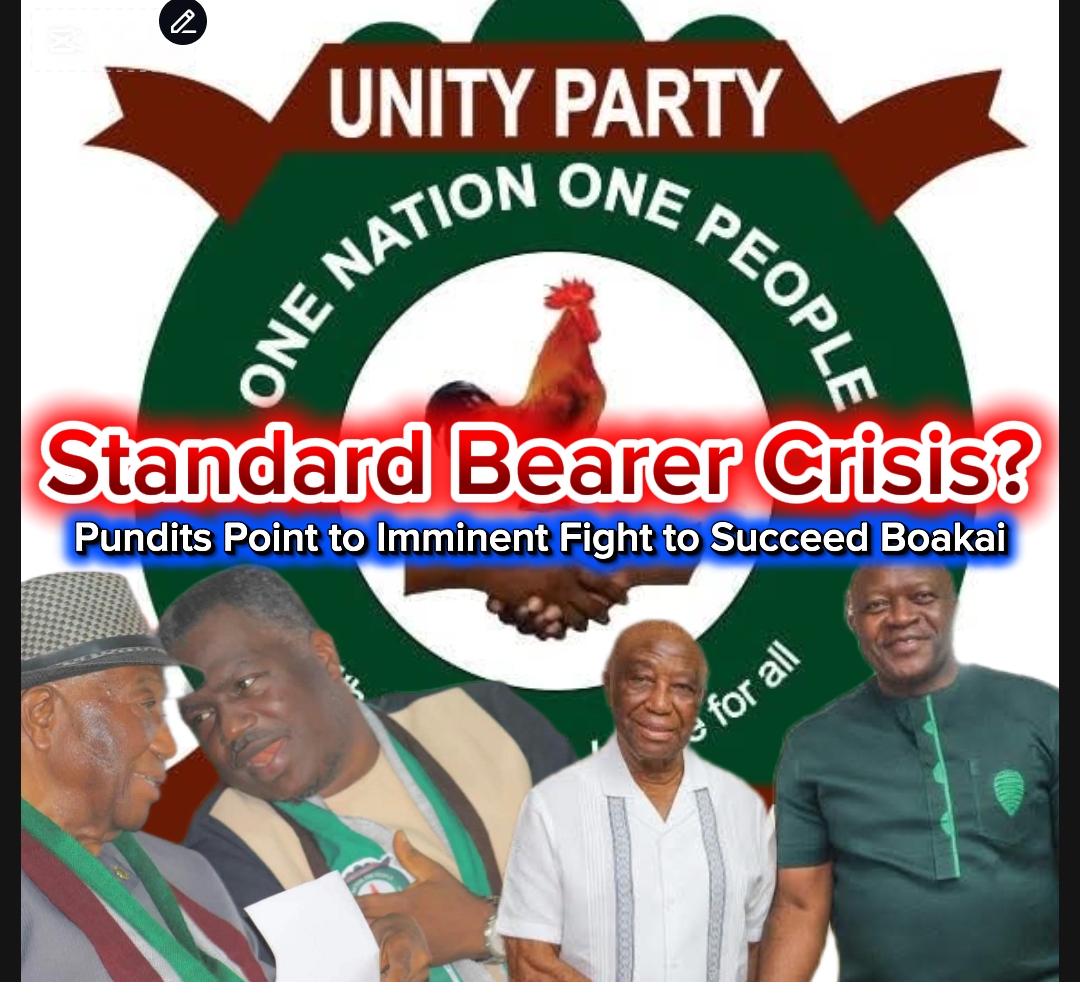
Growing criticism of Vice President Jeremiah Kpan Koung is fueling speculation about an early power struggle within the ruling Unity Party (UP) over who eventually succeeds President Joseph Nyuma Boakai.
The debate took center stage Sunday night on the popular Spoon Talk Show, where panelists openly questioned VP Koung’s political strength and effectiveness in office, with some describing his performance as weak. The discussion framed Koung’s struggles not just as a governance issue, but as a potential liability in the unfolding battle for UP’s future leadership.
Panelists Isaac Doe, Jacob Jallah, and Keff Hassan argued that despite being entrusted with high-profile responsibilities—including chairing committees on major commodity price reductions and oversight of the 285 yellow machines program—the Vice President has failed to assert authority or deliver visible results. They noted that such expansive assignments were never given to former Vice President Jewel Howard Taylor, yet Koung is perceived as buckling under the weight of party pressure and internal resistance.
Much of that resistance, pundits alleged, is coming from influential Unity Party figures, including Finance Minister Augustine Kpehe Ngafuan. According to the panelists, entrenched party elites continue to dominate decision-making, leaving the Vice President politically boxed in and unable to independently shape policy or command loyalty within the party structure. This dynamic led some commentators to label Koung the “weakest vice president in Liberian history.”
Beyond performance, the discussion revealed deeper fault lines within the Unity Party. With President Boakai seen as a one-term stabilizing figure by some analysts, attention is already shifting to the question of succession. Supporters of VP Koung view him as the natural heir and future standard bearer, arguing that incumbency and regional balance work in his favor. However, a competing bloc is reportedly rallying behind Ngafuan, citing his technocratic experience, firm grip on government operations, and perceived political competence.
Political observers warn that if these tensions continue unchecked, the Unity Party risks entering the next electoral cycle divided and weakened. An open or poorly managed standard bearer fight could fracture the party’s base, hand momentum to a more unified opposition, and erode public confidence in the ruling establishment.
For Vice President Koung, the criticism goes beyond television debates and public perception. As pundits suggest, the real test ahead is not only about proving his effectiveness in government, but about surviving—and prevailing in—the internal power contest that may define the Unity Party’s post-Boakai era.
